
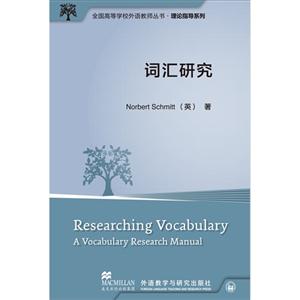
作者:(英)施密特(NorbertSchmi
页数:448
出版社:外语教学与研究出版社
出版日期:2015
ISBN:9787513552516
高清校对版pdf(带目录)
夸克网盘:https://pan.quark.cn/s/978354c88716
百度网盘:https://pan.baidu.com/s/1xFQUzo49znUkQ9-s2ivy9A?pwd=iieh
内容简介
《词汇研究》综述了大量的词汇研究方法,对研究者如何实施效度和信度兼备的母语及二语词汇研究提出许多实用的建议。本书共四部分。第一部分回顾了之前的词汇研究并提出了在设计词汇研究时必须要考虑的一些关键问题。第二部分论述了词汇研究的基础,如词汇研究应包括哪些因素。同时,本部分还论述了词汇研究应关注的一个典型现象——公式语言。第三部分讨论了词汇研究的实施细则,如研究方法和研究对象的选择、研究结果的解读和汇报等;并对如何测量词汇进行了详尽阐述。最后一部分罗列介绍了大量的词汇研究资源,有研究工具、语料库、词汇表、网站、文献以及该研究领域的重量级代表人物及等。
作者简介
Norbert Schmitt博士,是英国诺丁汉大学(Nottingham University)应用语言学教授,他对二语词汇习得研究领域的各个方面都有浓厚兴趣,是二语词汇习得研究领域的领军人物之一。他近期的研究重点包括:语块研究、词汇与阅读的相关研究、词汇测试、以及词汇的显性和隐性知识研究。
本书特色
本书综述了大量的词汇研究方法,对研究者如何实施效度和信度兼备的母语及二语词汇研究提出许多实用的建议。本书共四部分。第一部分回顾了之前的词汇研究并提出了在设计词汇研究时必须要考虑的一些关键问题。第二部分论述了词汇研究的基础,如词汇研究应包括哪些因素。同时,本部分还论述了词汇研究应关注的一个典型现象——公式语言。第三部分讨论了词汇研究的实施细则,如研究方法和研究对象的选择、研究结果的解读和汇报等;并对如何测量词汇进行了详尽阐述。最后一部分罗列介绍了大量的词汇研究资源,有研究工具、语料库、词汇表、网站、文献以及该研究领域的重量级代表人物及等。
目录
acknowledgements
quick checklist (principal sections which discuss these issues)
part i overview of vocabulary issues
1 vocabulary use and acquisition
1.1 ten key issues
1.2 vocabulary and reading
1.3 a sample of prominent knowledge gaps in the field of
vocabulary studies
part 2 foundations of vocabulary research
2 issues of vocabularyacquisition and use
2.1 form-meaning relationships
2.2 meaning
2.3 intrinsic difficulty
2.4 network connections (associations)
2.5 frequency
2.6 l 1 influence on vocabulary learning
2.7 describing different types of vocabulary
2.8 receptive and productive mastery
2.9 vocabulary learning strategies/self-regulating behavior
2.10 computer simulations of vocabulary
2.11 psycholinguistic/neurolinguistic research
3 formulaie language
3.1 identification
3.2 strength of association--hypothesis tests
3.3 strength of association--mutual information
3.4 a directional measure of collocation
3.5 formulaic language with open slots
3.6 processing formulaic language
3.7 acquisition of formulaic language
3.8 the psycholinguistic reality of corpus-extracted
formulaic sequences
3.9 nonnative use of formulaic language
part 3 researching vocabulary
4 issues in research methodology
4.1 qualitative research
4.2 participants
4.3 the need for multiple measures of vocabulary
4.4 the need for longitudinal studies and delayed posttests
4.5 selection of target lexical items
4.6 sample size of lexical items
4.7 interpreting and reporting results
5 measuring vocabulary
5.1 global measurement issues
5.2 measuring vocabulary size
5.3 measuring the quality(depth)ofvocabulary knowledge
5.4 measuring automaticity/speed of processing
5.5 measuring organization
5.6 measuring attrition atld degrees ofresidual lexical retention
6 example research projects
part 4 resources
7 vocabulary resources
7.1 instruments
7.2 corpora
7.3 concordancers/tools
7.4 vocabulary lists ·
7.5 websites
7.6 bibliographies
7.7 important personalities in the field ofvocabulary studies
……
note
references
index
非特殊说明,本博所有文章均为博主原创。
如若转载,请注明出处:https://www.xiazainiu.com/Wd1qk_5_87256.html
![[PDF下载] 清末民初词汇研究](https://image12.bookschina.com/2020/20200727/1/B8254164.jpg "[PDF下载] 清末民初词汇研究")
![[PDF下载] 农业文献词汇研究](https://image12.bookschina.com/2023/20231120/1/B9187534.jpg "[PDF下载] 农业文献词汇研究")
![[PDF下载] 东汉佛经词汇研究](https://image12.bookschina.com/2025/20250404/1/B9524861.jpg "[PDF下载] 东汉佛经词汇研究")
![[PDF下载] 晋南方言词汇研究](https://image12.bookschina.com/2024/20240811/1/B9277899.jpg "[PDF下载] 晋南方言词汇研究")
共有 0 条评论